
The world of wealth management is a complex landscape, navigating the intricacies of investment strategies, financial planning, and regulatory compliance. This exploration delves into the realm of top wealth management firms, examining their defining characteristics, service offerings, client profiles, and the transformative influence of technology. We will analyze how these firms adapt to evolving regulatory landscapes and explore future trends that will shape the industry’s trajectory.
Understanding the nuances of these firms is crucial for high-net-worth individuals seeking expert guidance in managing their assets and achieving their financial goals. From traditional private banks to innovative tech-driven solutions, we’ll examine the diverse approaches and strategies employed by leading players in this dynamic sector.
Defining Top Wealth Management Firms
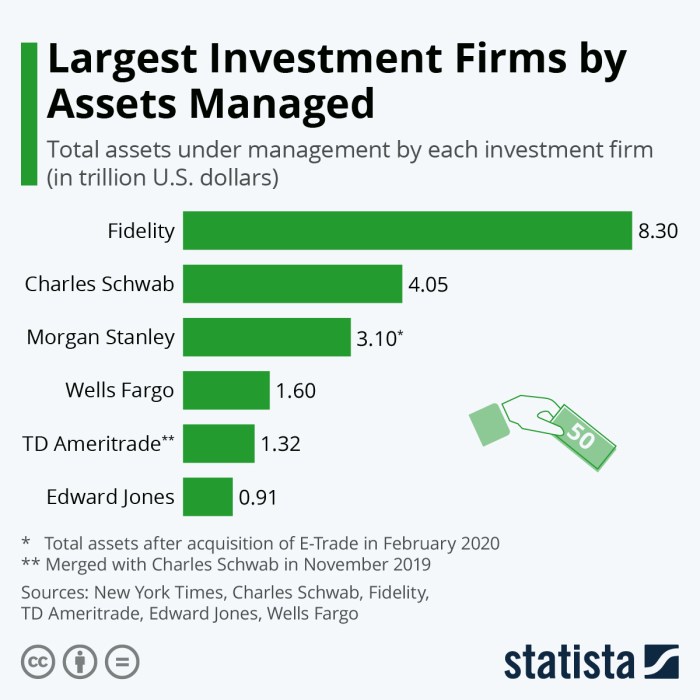
Defining “top” wealth management firms requires a multifaceted approach, moving beyond simple metrics to encompass a holistic view of their performance and offerings. While assets under management (AUM) are a crucial indicator of scale and success, a truly comprehensive assessment necessitates considering client satisfaction, geographical reach, and the breadth and depth of their service offerings.The landscape of wealth management is diverse, encompassing various business models catering to different client needs and wealth levels.
Several key types exist, each with its own unique characteristics and advantages.
Types of Wealth Management Firms
Wealth management firms are broadly categorized into private banks, independent advisors, and multi-family offices. Private banks, often part of larger financial institutions, typically manage substantial assets for high-net-worth individuals, providing a comprehensive suite of services including investment management, lending, and trust services. Independent advisors, on the other hand, operate independently and offer personalized financial planning and investment management services, often with a greater degree of flexibility and client focus.
Multi-family offices cater specifically to ultra-high-net-worth families, providing comprehensive wealth management services encompassing investment management, tax planning, estate planning, and family governance. The choice between these models depends heavily on individual client needs and preferences.
Business Model Comparisons: Three Prominent Firms
Examining the business models of three prominent firms illustrates the diversity within the wealth management sector. Let’s consider (hypothetical examples for illustrative purposes, replacing with real firms would require extensive research and verification of data):Firm A (Private Bank Model): This hypothetical firm, similar to a large international bank’s wealth management division, focuses on a broad client base with high AUM.
Their business model relies on economies of scale, offering a standardized yet comprehensive suite of services to a large number of clients. Profitability is driven by fees on AUM, lending activities, and other ancillary services. Client relationships may be less personalized compared to smaller firms.Firm B (Independent Advisor Model): This hypothetical firm embodies the independent advisor model, prioritizing personalized service and client relationships.
Their business model emphasizes strong client relationships, often built on trust and long-term partnerships. Profitability is generated through fees based on assets under management or hourly fees for financial planning services. This model often requires a smaller client base for personalized service delivery.Firm C (Multi-Family Office Model): This hypothetical firm specializes in ultra-high-net-worth families, providing holistic wealth management services that extend beyond investments.
Their business model centers on comprehensive family governance, estate planning, and philanthropic advisory, in addition to investment management. Profitability is achieved through a combination of fees based on AUM, retainer fees, and performance-based incentives. This model demands deep expertise across multiple financial and legal disciplines.
Key Services Offered by Top Firms
Leading wealth management firms provide a comprehensive suite of services designed to help high-net-worth individuals and families grow, protect, and transfer their wealth across generations. These services are typically highly personalized and tailored to meet the unique financial circumstances and goals of each client. The breadth and depth of these offerings are key differentiators among firms.
Top-tier wealth management firms offer a core set of services, often expanding into more specialized areas depending on client needs and the firm’s expertise. These core services represent the foundational elements of comprehensive wealth management.
Investment Management
Investment management is the cornerstone of most wealth management services. This involves creating and managing diversified investment portfolios tailored to individual risk tolerance, time horizon, and financial objectives. Sophisticated strategies may incorporate various asset classes, including stocks, bonds, real estate, private equity, and alternative investments. Top firms often employ teams of experienced investment professionals who conduct thorough due diligence and actively manage portfolios to optimize returns while mitigating risk.
They leverage advanced technology and quantitative analysis to inform investment decisions.
Financial Planning
Financial planning encompasses a broader scope than just investment management. It involves a holistic assessment of a client’s financial situation, including income, expenses, assets, liabilities, and insurance coverage. Financial planners work with clients to establish clear financial goals, develop strategies to achieve them, and monitor progress over time. This often includes retirement planning, education planning, and debt management strategies.
Tax Planning
Effective tax planning is crucial for minimizing tax liabilities and maximizing after-tax returns. Wealth management firms often employ tax specialists who work closely with clients and their tax advisors to develop strategies that are compliant with current tax laws and regulations. This may involve strategies such as tax-loss harvesting, charitable giving, and estate tax planning.
Estate Planning
Estate planning focuses on the preservation and transfer of wealth to future generations. This involves creating legal documents such as wills, trusts, and power of attorney to ensure that assets are distributed according to the client’s wishes and to minimize estate taxes. Wealth management firms often collaborate with legal professionals to ensure that estate plans are legally sound and effectively protect the client’s assets.
Philanthropy Services
Many high-net-worth individuals wish to give back to their communities and support causes they care about. Top wealth management firms offer philanthropy services to help clients establish and manage their charitable giving programs. This can include setting up private foundations, making donations to existing charities, and developing strategies for maximizing the tax benefits of charitable giving.
Fee Structures of Wealth Management Services
Fee structures vary significantly among wealth management firms and depend on the services provided and the client’s assets under management (AUM). The following table provides a general overview. Note that these are illustrative examples and actual fees can vary considerably.
| Service | Firm A (AUM-based) | Firm B (Hourly/Project) | Firm C (Hybrid) |
|---|---|---|---|
| Investment Management | 1.0%
|
$300 – $500 per hour | 0.75% of AUM + hourly fees for specialized services |
| Financial Planning | Included in investment management fee | $250 – $400 per hour, project-based fees also common | Separate fee, typically a flat fee per plan or hourly rate |
| Tax Planning | Often included as part of comprehensive wealth management | Hourly or project-based fees | Separate fee, project-based or retainer agreement |
| Estate Planning | Referrals to external legal professionals | Project-based fees | Referrals, or collaboration with in-house legal specialists (additional fees apply) |
| Philanthropy Services | Often included with comprehensive wealth management, or separate fee based on complexity | Hourly or project-based fees | Fee based on services rendered, including foundation setup and management |
Innovative Wealth Management Services
The wealth management industry is constantly evolving to meet the changing needs of clients. Several firms are at the forefront of innovation, offering services that go beyond traditional offerings.
For example, some firms are incorporating advanced technology such as artificial intelligence (AI) and machine learning (ML) to enhance portfolio management, risk assessment, and client communication. Others are developing sophisticated financial modeling tools to help clients make better informed decisions. Furthermore, some firms are focusing on sustainable and impact investing, allowing clients to align their investments with their values and contribute to positive social and environmental outcomes.
Finally, personalized financial education and coaching are also becoming increasingly popular, empowering clients to take a more active role in managing their finances.
Technological Advancements and Their Impact
The wealth management industry is undergoing a significant transformation driven by rapid technological advancements. These innovations are not merely enhancing existing services; they are fundamentally reshaping the way wealth is managed, advised upon, and ultimately, preserved and grown. This shift is impacting both the operational efficiency of firms and, crucially, the client experience.Technological advancements are revolutionizing how wealth management firms operate and interact with clients.
Robo-advisors, artificial intelligence (AI)-powered tools, and sophisticated data analytics platforms are becoming increasingly integral to the industry’s infrastructure. These tools are streamlining processes, personalizing client interactions, and opening up access to wealth management services to a broader demographic. This evolution presents both opportunities and challenges for traditional firms, necessitating adaptation and innovation to remain competitive.
Enhanced Client Experience Through Technology
Technology is significantly improving the client experience in several key areas. Personalized financial planning, previously a time-consuming and often costly process, is now achievable through AI-driven tools that can analyze vast datasets to create customized investment strategies tailored to individual risk profiles and financial goals. These tools also offer 24/7 accessibility to account information and portfolio performance, empowering clients to monitor their investments and make informed decisions at their convenience.
Furthermore, improved communication channels, such as secure messaging platforms and video conferencing, facilitate seamless and efficient interactions between clients and their advisors, fostering stronger relationships built on trust and transparency. For example, a client can easily access their portfolio performance through a user-friendly mobile app, receive personalized investment recommendations based on their risk tolerance, and communicate with their advisor instantly through secure messaging, all enhancing the overall experience.
Operational Efficiency Improvements via Technology
Technology is driving significant improvements in the operational efficiency of wealth management firms. Automation of repetitive tasks, such as data entry and portfolio rebalancing, frees up advisors to focus on higher-value activities, such as client relationship management and strategic financial planning. AI-powered tools can also identify potential risks and opportunities more efficiently than human analysts, enabling firms to make faster and more informed investment decisions.
This increased efficiency translates to lower operational costs and improved profitability, ultimately benefiting both the firm and its clients. For instance, the automation of trade execution and account reconciliation processes reduces manual errors and frees up staff to focus on providing more personalized client service. Similarly, AI-driven fraud detection systems can proactively identify and mitigate potential security risks, protecting client assets and strengthening the firm’s reputation.
Comparison of Traditional and Technology-Driven Wealth Management
| Feature | Traditional Wealth Management | Technology-Driven Wealth Management |
|---|---|---|
| Client Interaction | Primarily in-person meetings; limited accessibility | Digital platforms, mobile apps, video conferencing; 24/7 accessibility |
| Investment Strategy | Based on advisor’s expertise and experience; potentially less personalized | AI-driven analysis and personalized recommendations; data-driven strategies |
| Cost | Generally higher fees due to labor-intensive processes | Potentially lower fees due to automation and efficiency gains; robo-advisors offer lower-cost options |
| Scalability | Limited scalability due to reliance on human advisors | Highly scalable due to automation and digital platforms |
| Accessibility | Limited to clients with significant assets | Greater accessibility to a broader range of clients, including those with smaller portfolios |
Regulatory Landscape and Compliance
The wealth management industry operates within a complex and evolving regulatory framework designed to protect investors and maintain market integrity. These regulations vary significantly across jurisdictions but share common goals of ensuring transparency, preventing fraud, and mitigating risks. Compliance is paramount, impacting every aspect of a firm’s operations, from client onboarding to investment strategies.The key regulatory requirements governing wealth management firms are multifaceted and often interconnected.
They encompass areas such as investor protection, anti-money laundering (AML), know-your-customer (KYC) protocols, data privacy, and conflict of interest management. Specific regulations vary by location, with bodies like the Securities and Exchange Commission (SEC) in the United States, the Financial Conduct Authority (FCA) in the United Kingdom, and similar organizations globally setting the standards. These regulations are frequently updated in response to evolving market conditions and emerging risks.
Key Regulatory Requirements and Compliance Standards
Wealth management firms must adhere to a comprehensive set of rules and standards to ensure the safety and security of client assets and maintain investor confidence. These requirements often involve stringent due diligence processes, rigorous record-keeping, and regular audits to detect and prevent any violations. Failure to comply can lead to significant penalties, including hefty fines, operational restrictions, and reputational damage.
A robust compliance program is therefore crucial for the long-term success of any wealth management firm.
Impact of Regulatory Changes on Firm Operations and Strategies
Regulatory changes necessitate significant adjustments to the operational models and strategic planning of top wealth management firms. New rules often require substantial investments in technology, personnel, and processes. For example, the implementation of GDPR (General Data Protection Regulation) in Europe necessitated significant changes in data management and security protocols for firms operating within the EU. Similarly, increased scrutiny on AML compliance has led to the adoption of more sophisticated risk assessment and monitoring systems.
These changes can impact profitability and require firms to adapt quickly to remain competitive and compliant.
Examples of Compliance Measures Implemented by Top Firms
Leading wealth management firms employ various strategies to ensure robust compliance. These include:
- Dedicated Compliance Departments: Many firms have dedicated compliance departments staffed with experienced professionals responsible for monitoring regulatory changes, implementing compliance programs, and conducting internal audits.
- Robust KYC/AML Procedures: Stringent Know Your Customer (KYC) and Anti-Money Laundering (AML) procedures are implemented to identify and mitigate risks associated with financial crime. This involves thorough client due diligence, transaction monitoring, and suspicious activity reporting.
- Investment Strategy Oversight: Regular reviews of investment strategies are conducted to ensure they align with regulatory requirements and client risk profiles, mitigating potential conflicts of interest.
- Technology-Driven Compliance Solutions: Sophisticated technology solutions are used to automate compliance processes, enhance monitoring capabilities, and improve data security. This includes using AI-powered systems for fraud detection and regulatory reporting.
- Regular Audits and Training: Regular internal and external audits are conducted to assess compliance effectiveness, and employees receive ongoing training on relevant regulations and best practices.
Wealth Management
Wealth management goes beyond simply investing money; it’s a comprehensive approach to securing and growing an individual’s or family’s financial well-being. It encompasses a wide range of services designed to help clients achieve their long-term financial goals, considering their unique circumstances, risk tolerance, and aspirations. This holistic perspective ensures that all aspects of a client’s financial life are aligned and working together towards a common objective.Wealth management considers the interconnectedness of various financial elements.
It’s not just about investment strategies; it’s about strategically managing all aspects of a client’s financial life to optimize their overall financial health. This includes careful consideration of tax implications, estate planning, risk management, and charitable giving, all tailored to the individual’s specific needs and goals.
Holistic Financial Planning in Wealth Management
Holistic financial planning forms the cornerstone of effective wealth management. It involves a thorough assessment of a client’s current financial situation, including assets, liabilities, income, and expenses. This assessment then serves as the basis for developing a personalized financial plan that addresses all aspects of their financial life, from short-term goals like debt management to long-term objectives such as retirement planning and legacy creation.
A holistic approach ensures that all financial decisions are integrated and work synergistically, maximizing efficiency and minimizing conflicts. For example, a holistic plan might incorporate tax-efficient investment strategies to minimize tax burdens while simultaneously funding retirement accounts and contributing to charitable causes.
The Interplay Between Wealth Management and Other Financial Services
Wealth management is intrinsically linked to other crucial financial services. Insurance, for instance, plays a vital role in risk management, protecting clients’ assets and future earnings from unforeseen events like illness, disability, or death. Life insurance, disability insurance, and long-term care insurance are often integral components of a comprehensive wealth management plan. Similarly, banking services are essential for managing cash flow, facilitating transactions, and providing access to credit when needed.
The relationship between wealth management and these services is symbiotic; wealth managers often collaborate with insurance brokers and banking professionals to ensure that all aspects of a client’s financial life are effectively managed. A coordinated approach ensures seamless integration and optimal financial outcomes. For example, a wealth manager might work with a bank to structure loans in a tax-advantaged way, or with an insurance broker to ensure adequate coverage for high-net-worth assets.
Future Trends in Wealth Management
The wealth management industry is undergoing a period of significant transformation, driven by technological advancements, evolving client expectations, and a shifting regulatory landscape. Understanding these emerging trends is crucial for firms seeking to maintain competitiveness and relevance in the years to come. This section will explore several key trends and their anticipated impact on the industry’s structure and operations.
Several powerful forces are reshaping the wealth management landscape. These forces are interconnected and will collectively redefine how wealth is managed, advised upon, and ultimately, passed on to future generations. The convergence of these trends presents both opportunities and challenges for established firms and new entrants alike.
Increased Use of Artificial Intelligence and Machine Learning
The integration of AI and machine learning is revolutionizing various aspects of wealth management. AI-powered robo-advisors are becoming increasingly sophisticated, offering personalized investment strategies at lower costs than traditional advisors. Machine learning algorithms are also improving risk management, portfolio optimization, and fraud detection. For example, some firms are using AI to analyze vast datasets of market data and client information to identify investment opportunities and potential risks more effectively than human analysts could alone.
This increased efficiency translates to better returns for clients and reduced operational costs for firms.
Growing Demand for Sustainable and Responsible Investing
There’s a marked increase in client demand for investments aligned with environmental, social, and governance (ESG) criteria. This trend reflects a growing awareness of the impact of investments on society and the environment. Wealth management firms are responding by offering a wider range of sustainable and responsible investment options, including impact investing and green bonds. The integration of ESG factors into investment decisions is no longer a niche offering but a mainstream expectation for many high-net-worth individuals and institutional investors.
For instance, the rise of ESG-focused ETFs and mutual funds indicates the growing market demand.
Hyper-Personalization and Client-Centric Services
Clients are demanding more personalized and tailored services. Wealth management firms are adopting technology to deliver hyper-personalized experiences, leveraging data analytics to understand individual client needs and preferences better. This includes personalized financial planning, customized investment strategies, and proactive wealth management solutions. For example, firms are utilizing client relationship management (CRM) systems that integrate data from various sources to create a 360-degree view of the client, enabling advisors to provide more relevant and timely advice.
The Rise of Fintech and Open Banking
The rise of fintech companies and the adoption of open banking are disrupting traditional wealth management models. Fintech firms are offering innovative solutions that challenge established players, providing increased transparency, accessibility, and efficiency. Open banking enables the secure sharing of financial data between different institutions, creating opportunities for greater personalization and integration of financial services. This fosters greater competition and innovation within the industry.
For instance, several fintech platforms now offer direct-to-consumer investment solutions, bypassing traditional brokerage firms.
A Visual Representation of the Projected Growth and Evolution of the Wealth Management Industry
Imagine a graph with time on the x-axis and market size/complexity on the y-axis. The graph shows a steady upward trend, representing overall growth. However, the line isn’t linear; it accelerates more sharply in recent years and features several inflection points. These points represent significant technological advancements (e.g., the rise of robo-advisors, the adoption of AI), shifts in client preferences (e.g., increased demand for ESG investing), and regulatory changes.
The overall shape suggests exponential growth, with a diversification of service offerings and business models. The graph also illustrates the increasing integration of technology and data analytics within the industry, represented by a broadening of the line, signifying a more complex and multifaceted industry landscape.
In conclusion, the landscape of top wealth management firms is one of constant evolution, driven by technological advancements, shifting regulatory environments, and the ever-changing needs of high-net-worth clients. By understanding the core services, client profiles, and future trends shaping this industry, individuals can make informed decisions when selecting a firm to partner with in achieving their long-term financial objectives.
The firms’ commitment to compliance and innovation will ultimately determine their success in this competitive and ever-evolving market.
Q&A
What is the average fee charged by top wealth management firms?
Fees vary significantly depending on the services provided and the firm’s structure. They can range from a percentage of assets under management (AUM) to hourly rates or a combination of both. It’s essential to clarify the fee structure before engaging with a firm.
How do I choose the right wealth management firm for my needs?
Consider factors like your net worth, investment goals, risk tolerance, and desired level of service. Research different firms, compare their services and fees, and schedule consultations to find a firm that aligns with your individual financial circumstances and objectives.
What is the role of a financial advisor within a wealth management firm?
Financial advisors provide personalized guidance on investment strategies, financial planning, and other wealth management services. They work closely with clients to develop and implement customized plans to meet their specific financial goals.
What are the risks associated with using a wealth management firm?
While wealth management firms aim to mitigate risks, inherent market volatility and potential conflicts of interest are always present. Thorough due diligence and careful selection of a reputable firm are crucial to minimize these risks.


