
Beyond the traditional pursuit of financial security, holistic wealth management embraces a broader perspective, recognizing that true wealth encompasses physical, mental, and social well-being alongside financial prosperity. This integrated approach acknowledges the interconnectedness of these aspects, recognizing how each influences and supports the others in achieving a fulfilling and balanced life. This guide explores the principles and practices of this transformative approach, illuminating the path to a richer, more holistic existence.
We’ll delve into the core tenets of holistic wealth management, contrasting it with traditional methods and highlighting the crucial differences in client relationships and service scopes. We’ll examine the key components of a holistic wealth plan, emphasizing the importance of financial planning, risk management, and the integration of various aspects of well-being, including physical health, mental wellness, and social responsibility.
Through case studies and future trend analysis, we aim to provide a comprehensive understanding of this evolving field.
Defining Holistic Wealth Management
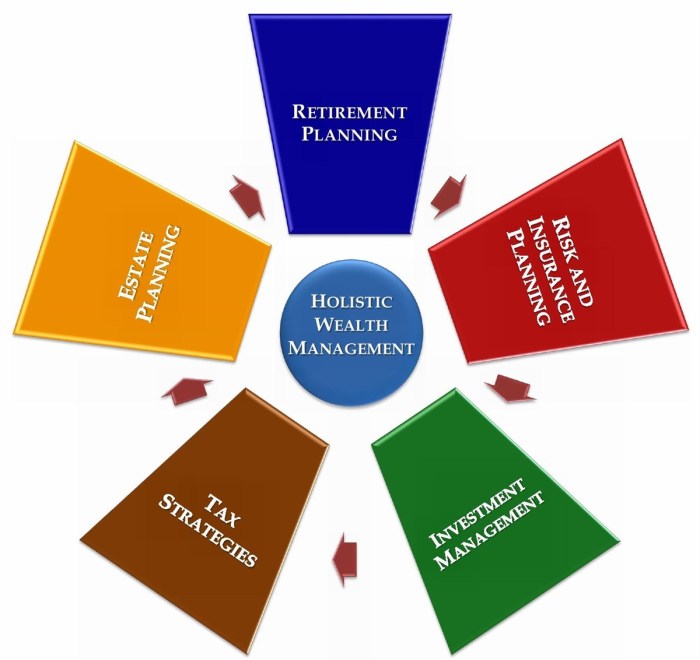
Holistic wealth management takes a comprehensive approach to financial planning, considering all aspects of a client’s life and financial situation. Unlike traditional methods that focus primarily on investment management, this approach integrates financial planning with other key life areas to create a truly personalized and sustainable strategy. It aims to achieve not just financial success, but overall well-being.Holistic wealth management operates on several core principles.
Firstly, it emphasizes a long-term perspective, moving beyond short-term gains to build lasting financial security. Secondly, it prioritizes a deep understanding of the client’s individual circumstances, values, and goals. This includes not only financial goals, but also personal and family aspirations. Thirdly, it advocates for a coordinated approach, integrating various financial and non-financial elements into a unified plan. Finally, it promotes ongoing communication and adaptation, recognizing that life circumstances and financial goals evolve over time.
Comparison of Holistic and Traditional Wealth Management
Traditional wealth management typically focuses primarily on investment strategies, portfolio management, and tax optimization. The client relationship is often transactional, with advisors primarily offering investment advice and portfolio management services. In contrast, holistic wealth management adopts a broader perspective, incorporating financial planning, estate planning, risk management, insurance planning, and often even considerations of philanthropy and legacy planning. The client relationship is far more collaborative and long-term, built on trust and a deep understanding of the client’s entire life picture.
The advisor acts as a trusted advisor, guiding the client through all aspects of their financial life.
Client Relationship Differences
The key difference lies in the depth and breadth of the relationship. In traditional wealth management, the relationship is often transactional and focused solely on investment performance. The advisor’s role is primarily to manage investments and provide market updates. In contrast, holistic wealth management fosters a long-term, collaborative partnership. The advisor works closely with the client to understand their values, goals, and aspirations, going beyond mere investment strategies to help them achieve their overall life objectives.
This often includes regular meetings, open communication, and a holistic review of their financial health. The advisor becomes a trusted confidant, assisting in navigating complex life events and ensuring the client’s financial well-being is integrated into their overall life plan.
Scope of Services Offered
| Service | Traditional Wealth Management | Holistic Wealth Management |
|---|---|---|
| Investment Management | High | High |
| Financial Planning | Low to Moderate | High |
| Estate Planning | Often outsourced | Integrated |
| Tax Planning | Moderate | High, integrated with other planning |
| Risk Management | Limited | Comprehensive |
| Insurance Planning | Often outsourced | Integrated |
| Philanthropic Planning | Rarely offered | Often included |
Components of a Holistic Wealth Plan
A holistic wealth plan goes beyond simply accumulating financial assets; it encompasses a comprehensive approach to well-being, considering financial, physical, and mental aspects of an individual’s life. This integrated strategy aims to create a balanced and fulfilling life, rather than solely focusing on monetary success. A well-structured plan considers the interconnectedness of these areas, recognizing that progress in one often positively influences the others.
Essential Elements of a Comprehensive Holistic Wealth Plan
A truly comprehensive holistic wealth plan incorporates several key elements working in synergy. These elements are not independent but rather interdependent, reinforcing and supporting each other. Ignoring one area can negatively impact the others, undermining the overall effectiveness of the plan. For example, neglecting physical health can lead to reduced earning potential and increased healthcare costs, directly impacting the financial component.
- Financial Planning: This involves setting financial goals, budgeting, investing, managing debt, and planning for retirement and other life events. It forms the cornerstone of the plan, providing the financial security necessary to pursue other aspects of well-being.
- Physical Wellbeing: This focuses on maintaining good physical health through proper nutrition, regular exercise, and preventative healthcare. A healthy body is crucial for productivity, energy levels, and overall enjoyment of life, positively impacting both financial and mental well-being.
- Mental Wellbeing: This encompasses mental health, stress management, and emotional intelligence. It involves practices like mindfulness, meditation, or therapy to cultivate emotional resilience and a positive outlook, leading to better decision-making and improved relationships, which in turn benefit the financial and physical aspects.
- Social Wellbeing: Strong social connections and supportive relationships contribute significantly to overall well-being. This aspect considers fostering meaningful relationships with family, friends, and community, providing emotional support and a sense of belonging. A strong support network can help navigate challenges and celebrate successes, positively influencing all other areas of the plan.
- Purpose and Values: Defining personal values and aligning financial and life goals with them is crucial. This element helps provide direction and motivation, ensuring that the wealth plan serves a greater purpose beyond mere accumulation of assets.
The Importance of Financial Planning within a Holistic Framework
Financial planning is the foundation upon which a holistic wealth plan is built. It provides the security and resources necessary to pursue other aspects of well-being. Without a solid financial foundation, achieving goals related to physical and mental health can be significantly more challenging. For instance, sufficient financial resources are needed for preventative healthcare, healthy food choices, and access to mental health services.
Furthermore, financial stability reduces stress and anxiety, directly improving mental wellbeing. A well-defined financial plan considers both short-term and long-term goals, ensuring a sustainable approach to wealth management that supports overall well-being throughout life. This might involve retirement planning, investment strategies, and estate planning, all crucial elements for long-term financial security.
Risk Management in a Holistic Wealth Strategy
Risk management is an integral part of a holistic wealth strategy. It involves identifying and mitigating potential threats to financial, physical, and mental well-being. This could include diversifying investments to minimize financial risk, maintaining a healthy lifestyle to reduce health risks, and practicing stress management techniques to mitigate mental health risks. A robust risk management plan considers various scenarios, including unexpected job loss, health emergencies, or market downturns, and develops contingency plans to minimize their impact.
For example, having emergency savings, adequate health insurance, and a strong support network can help mitigate the impact of unforeseen events.
Sample Holistic Wealth Plan
This sample plan illustrates the integration of financial, physical, and mental wellbeing. Note that this is a simplified example and individual plans should be tailored to specific circumstances.
| Area | Goals | Actions | Timeline |
|---|---|---|---|
| Financial Wellbeing | Accumulate $1 million in retirement savings; Pay off mortgage within 10 years; Establish an emergency fund of 6 months’ expenses. | Invest in a diversified portfolio; Create a detailed budget; Increase income through additional work or investment income. | 10-20 years; 10 years; Within 1 year |
| Physical Wellbeing | Maintain a healthy weight; Exercise regularly; Undergo annual health checkups. | Follow a balanced diet; Engage in at least 30 minutes of moderate-intensity exercise most days of the week; Schedule annual physical examinations. | Ongoing |
| Mental Wellbeing | Reduce stress levels; Improve sleep quality; Cultivate mindfulness. | Practice meditation or mindfulness techniques; Prioritize sufficient sleep; Seek professional help if needed. | Ongoing |
Integrating Different Aspects of Wellbeing
Holistic wealth management recognizes that financial wellbeing is intricately interwoven with other dimensions of well-being, creating a synergistic relationship where improvements in one area often positively impact others. Ignoring this interconnectedness can lead to an incomplete and potentially unsustainable approach to wealth management. A truly holistic plan considers physical, mental, social, and environmental factors, acknowledging their influence on financial decisions and long-term prosperity.A comprehensive approach requires understanding how these different aspects interact and influence each other.
For instance, neglecting physical health can lead to increased healthcare costs, impacting savings and investment goals. Conversely, financial stability can provide resources for better healthcare, leading to improved physical and mental well-being, which in turn can enhance productivity and earning potential.
Physical Health’s Influence on Financial Decisions and Vice Versa
Poor physical health can lead to reduced earning capacity due to missed work, decreased productivity, and increased healthcare expenses. For example, a chronic illness requiring ongoing treatment might necessitate significant outlays, potentially depleting savings and hindering long-term financial goals. Conversely, financial security allows for access to better healthcare, preventative measures, and healthier lifestyle choices. Individuals with stable finances can afford nutritious food, regular exercise, and preventative health screenings, reducing the likelihood of future health problems and associated costs.
This creates a positive feedback loop where improved health leads to improved financial stability, and vice versa.
Strategies for Integrating Mental Wellness into a Financial Plan
Mental wellbeing is crucial for effective financial decision-making. Stress, anxiety, and depression can impair judgment and lead to impulsive or irrational financial choices. Integrating mental wellness into a financial plan involves several strategies. This might include incorporating regular stress-management techniques like mindfulness or meditation into one’s routine, seeking professional help for mental health concerns, and setting realistic financial goals to avoid overwhelming pressure.
Furthermore, building a strong support system of friends and family can provide emotional resilience during challenging financial times. Financial planning should also consider incorporating flexibility and contingency plans to mitigate the impact of unexpected events that could trigger mental health challenges.
Impact of Social and Environmental Factors on Long-Term Wealth
Social connections and environmental sustainability are increasingly recognized as vital components of long-term wealth. Strong social networks provide support during difficult times and offer opportunities for collaboration and growth. Conversely, social isolation can negatively impact mental and physical health, leading to decreased productivity and increased healthcare costs. Similarly, environmental factors such as climate change and resource depletion can significantly impact financial stability through natural disasters, resource scarcity, and increased insurance premiums.
Investing in sustainable practices and supporting environmentally responsible businesses can contribute to long-term financial security while mitigating environmental risks.
Resources for Improving Wellbeing
Understanding the importance of holistic wellbeing is only the first step. Accessing and utilizing resources to improve various aspects of wellbeing is equally crucial.
- For Physical Health: Consult a physician for regular checkups and preventative care; join a gym or engage in regular physical activity; adopt a healthy diet; prioritize adequate sleep.
- For Mental Wellness: Seek therapy or counseling from a licensed professional; practice mindfulness or meditation; engage in hobbies and activities that promote relaxation and stress reduction; build and maintain strong social connections.
- For Financial Wellness: Consult a financial advisor for personalized financial planning; create a budget and track expenses; develop a savings and investment plan; educate yourself about personal finance.
- For Social Wellbeing: Nurture relationships with family and friends; join social clubs or volunteer organizations; engage in community activities.
- For Environmental Wellbeing: Support environmentally responsible businesses; reduce your carbon footprint; advocate for sustainable practices; educate yourself about environmental issues.
The Role of Financial Advisors in Holistic Wealth Management
Holistic wealth management goes beyond traditional financial planning, encompassing all facets of a client’s life to achieve a state of complete well-being. The financial advisor, therefore, plays a crucial, multifaceted role in guiding clients toward this comprehensive vision of wealth. Their expertise extends beyond investment strategies to encompass a broader understanding of their clients’ personal and professional goals.The skills and expertise required of a holistic wealth advisor are significantly more diverse than those of a traditional financial advisor.
They necessitate a blend of financial acumen and interpersonal sensitivity. While a solid understanding of investment vehicles, tax planning, and estate planning remains fundamental, holistic advisors also need strong communication skills, emotional intelligence, and a genuine interest in their clients’ overall well-being. They must be capable of integrating financial advice with lifestyle considerations, health concerns, and even spiritual goals.
This requires a proactive approach, actively engaging clients in open dialogue to build a comprehensive understanding of their life goals and aspirations.
Skills and Expertise of Holistic Wealth Advisors
Holistic wealth advisors require a multifaceted skillset. This includes proficiency in traditional financial planning, such as investment management, retirement planning, and tax optimization. Beyond this, however, they need strong interpersonal skills to build trusting relationships with clients, active listening skills to understand their unique circumstances, and the ability to translate complex financial information into easily understandable terms. Furthermore, they should possess a working knowledge of other relevant fields, such as health and wellness, to effectively integrate different aspects of well-being into a comprehensive financial plan.
For instance, understanding the financial implications of long-term health conditions or the cost of supporting aging parents is vital.
Comparison of Traditional and Holistic Financial Advisors
A traditional financial advisor primarily focuses on managing a client’s investments and ensuring their financial security through strategies like portfolio diversification and risk management. Their expertise is largely confined to the financial domain. In contrast, a holistic wealth advisor takes a broader, more integrated approach. They consider not only the client’s financial assets but also their personal values, life goals, and overall well-being.
They might help a client balance their desire for financial security with their passion for travel or philanthropy, or help them navigate the financial complexities of a career change or family expansion. The holistic advisor acts as a guide, helping the client navigate the complexities of life while aligning their financial decisions with their overall vision for the future.
Ethical Considerations for Holistic Wealth Advisors
The ethical considerations for holistic wealth advisors are paramount. Given the deeply personal nature of their work, maintaining client confidentiality and avoiding conflicts of interest is crucial. Transparency in fees and services is also essential, along with a commitment to acting in the client’s best interest at all times. This includes a willingness to refer clients to other specialists, such as therapists or life coaches, when necessary, rather than attempting to address issues outside their area of expertise.
A holistic advisor’s commitment to ethical practice fosters trust and builds strong, long-term relationships. For example, a holistic advisor might refuse a lucrative investment opportunity if it doesn’t align with the client’s risk tolerance or long-term goals, even if it means foregoing potential personal gain.
Building Trust and Rapport with Clients in a Holistic Approach
Building trust and rapport is fundamental to the success of a holistic wealth management relationship. This involves actively listening to clients, understanding their unique circumstances and aspirations, and demonstrating empathy and genuine care for their well-being. Regular communication, clear and transparent explanations of financial strategies, and proactive engagement are crucial. Furthermore, demonstrating a commitment to continuous learning and staying abreast of the latest developments in relevant fields reinforces the advisor’s credibility and expertise.
For instance, regular client check-ins that go beyond simply reviewing portfolio performance, incorporating discussions about life changes and adjustments to the overall plan, strengthen the advisor-client bond and build a deeper level of trust.
Case Studies and Examples
Holistic wealth management, unlike traditional approaches, considers all facets of a client’s life – financial, physical, mental, and social – to create a truly fulfilling and sustainable plan. The following case studies illustrate how this integrated approach yields superior long-term outcomes compared to strategies focusing solely on financial assets.
Hypothetical Case Study: The Young Entrepreneur
Sarah, a 35-year-old entrepreneur, experienced rapid success with her tech startup. A traditional financial advisor might have focused solely on maximizing her investment returns. However, a holistic advisor recognized Sarah’s high-stress lifestyle, neglecting her physical and mental wellbeing due to long working hours. The holistic plan incorporated financial planning (investment diversification, tax optimization), stress management techniques (yoga, mindfulness), and a structured schedule prioritizing work-life balance.
The result? Sarah experienced improved financial securityand* significantly reduced burnout, leading to sustained business growth and a greater sense of overall wellbeing. This demonstrates how addressing multiple aspects of life simultaneously fosters both financial success and personal fulfillment.
Successful Holistic Wealth Management Strategies for Different Client Profiles
Implementing holistic strategies requires tailoring the approach to individual needs. For instance, a young professional might benefit from a plan emphasizing debt reduction, early retirement savings, and skill development to enhance career progression. This contrasts with a retiree whose focus might shift to managing healthcare costs, estate planning, and maintaining social connections to prevent isolation. A holistic advisor acts as a guide, adapting the plan to each life stage and circumstance.
For young professionals, the focus might be on building a strong financial foundation while prioritizing experiences and skill development. For retirees, it might involve preserving capital, ensuring access to quality healthcare, and maximizing enjoyment of leisure time.
Long-Term Outcomes: Holistic vs. Traditional Approaches
The long-term benefits of a holistic approach are substantial. Consider a comparison: a client focusing solely on maximizing investment returns (traditional approach) might achieve significant financial growth but suffer from burnout or strained relationships, impacting their overall quality of life. In contrast, a client following a holistic plan would experience balanced growth across financial, physical, and emotional dimensions. This leads to greater resilience in the face of life’s challenges, sustained well-being, and a more fulfilling life, even if the purely financial gains are slightly less in the short-term.
The holistic approach prioritizes long-term sustainable wellbeing over short-term financial maximization.
Summary of Case Study Takeaways
| Case Study | Client Profile | Holistic Strategies Implemented | Long-Term Outcomes |
|---|---|---|---|
| The Young Entrepreneur | 35-year-old tech entrepreneur | Investment diversification, stress management techniques, work-life balance | Improved financial security, reduced burnout, sustained business growth, increased wellbeing |
| Young Professional | 28-year-old marketing manager | Debt reduction, retirement savings, skill development | Strong financial foundation, career advancement, improved financial literacy |
| Retiree | 65-year-old retired teacher | Healthcare cost management, estate planning, social engagement | Financial security in retirement, maintained health, active social life |
Wealth Management
Wealth management, at its core, focuses on the accumulation, preservation, and growth of an individual’s or family’s assets. It’s a multifaceted discipline that goes beyond simply investing money; it encompasses a holistic approach to financial well-being.
Fundamental Principles of Traditional Wealth Management
Traditional wealth management primarily centers on financial planning and investment strategies aimed at maximizing returns while mitigating risk. This often involves analyzing an individual’s financial situation, setting financial goals, and developing a portfolio of assets designed to meet those goals. A key principle is diversification, spreading investments across different asset classes to reduce overall portfolio volatility. Risk tolerance is also a crucial factor, influencing the types of investments selected.
The focus is largely on quantitative factors, such as return on investment and risk assessment, with less emphasis on qualitative aspects of well-being.
Limitations of Traditional Wealth Management Approaches
While effective in managing financial assets, traditional approaches often fall short in addressing the broader spectrum of an individual’s life. They may neglect crucial aspects like health, relationships, personal fulfillment, and legacy planning. Furthermore, the emphasis on quantitative measures can lead to overlooking qualitative factors that significantly impact overall well-being and long-term financial success. The compartmentalized nature of traditional approaches can also hinder the integrated management of various aspects of wealth.
For instance, a significant health event can dramatically impact an individual’s earning capacity and financial plans, a factor often not adequately considered in traditional models.
Wealth Preservation versus Wealth Creation Strategies
Wealth preservation strategies prioritize the protection and maintenance of existing assets. This often involves conservative investment approaches, focusing on capital preservation and minimizing risk. Examples include investing in low-risk bonds, holding cash reserves, and utilizing insurance products. In contrast, wealth creation strategies aim to actively grow assets through higher-risk, higher-return investments. This might involve investing in equities, real estate, or private equity, requiring a higher risk tolerance and a longer-term investment horizon.
The choice between these strategies depends heavily on individual circumstances, risk tolerance, and financial goals. A balanced approach, combining elements of both preservation and creation, is often the most effective long-term strategy.
Investment Vehicles Commonly Used in Wealth Management
A wide array of investment vehicles are employed in wealth management, each with its own risk-return profile. These include:
- Equities (stocks): Ownership shares in publicly traded companies, offering potential for high growth but also significant risk.
- Fixed-income securities (bonds): Loans to governments or corporations, providing a relatively stable income stream with lower risk than equities.
- Real estate: Investment in properties, offering potential for capital appreciation and rental income, but also requiring significant capital and management.
- Mutual funds: Pooled investments that diversify across multiple asset classes, offering a convenient and relatively low-cost way to invest.
- Alternative investments: Assets such as hedge funds, private equity, and commodities, which can offer higher returns but also come with higher risk and illiquidity.
The selection of appropriate investment vehicles depends on individual circumstances, risk tolerance, and financial goals. A well-diversified portfolio, tailored to meet specific needs, is crucial for effective wealth management.
Future Trends in Holistic Wealth Management
Holistic wealth management is evolving rapidly, driven by technological advancements, shifting client priorities, and a growing awareness of the interconnectedness of financial and personal well-being. The future of this field promises both significant opportunities and considerable challenges for practitioners and clients alike. This section explores some key emerging trends and their implications.
The Growing Importance of Sustainable and Impact Investing
Sustainable and impact investing, which considers environmental, social, and governance (ESG) factors alongside financial returns, is experiencing explosive growth. Clients are increasingly demanding investments that align with their values and contribute to a positive societal and environmental impact. This trend requires wealth managers to develop expertise in ESG analysis and to offer a wider range of sustainable investment options, including green bonds, impact funds, and socially responsible companies.
For example, the growth of ESG-focused mutual funds and ETFs reflects this increasing demand, offering investors a straightforward way to incorporate their values into their portfolios. This shift necessitates a deeper understanding of the long-term implications of investment decisions, moving beyond purely financial considerations.
The Rise of Fintech and Digital Wealth Management Platforms
Technology is revolutionizing the delivery of wealth management services. Fintech companies are developing sophisticated digital platforms that offer personalized financial planning, automated investing, and accessible financial advice at lower costs than traditional firms. These platforms leverage artificial intelligence (AI) and machine learning (ML) to analyze client data, provide personalized recommendations, and automate many aspects of the wealth management process.
For instance, robo-advisors are already offering automated portfolio management based on client risk profiles and goals, while other platforms offer comprehensive financial planning tools accessible through user-friendly interfaces. This trend enhances accessibility to financial services, particularly for younger generations who are comfortable interacting with technology. However, it also presents challenges related to data security and the potential for algorithmic bias.
Personalized and Proactive Wealth Management
The future of holistic wealth management lies in personalization and proactive advice. Clients expect tailored solutions that address their unique circumstances, goals, and values. This requires wealth managers to utilize advanced data analytics to gain a deeper understanding of client needs and to develop customized strategies that integrate all aspects of their well-being. For example, a wealth manager might use data to identify potential financial risks based on a client’s health status or career trajectory, proactively adjusting their investment strategy accordingly.
This proactive approach differentiates successful advisors from those who simply react to market changes or client requests. The focus shifts to long-term strategic planning that incorporates life events and evolving client needs.
Challenges and Opportunities
The increasing regulatory scrutiny of the financial industry, the need for ongoing professional development to keep pace with technological advancements, and the evolving client expectations present significant challenges. However, these challenges also create opportunities for firms that can adapt quickly and effectively. Firms that embrace technology, prioritize client personalization, and integrate ESG factors into their investment strategies are likely to thrive in the evolving landscape.
The ability to attract and retain top talent with expertise in technology, data analytics, and sustainable investing will be crucial for success. The competitive landscape will reward firms that can provide a seamless, integrated, and highly personalized experience for their clients, while navigating the regulatory complexities of the industry.
Ultimately, holistic wealth management transcends the mere accumulation of assets; it’s about cultivating a life of purpose, resilience, and lasting fulfillment. By embracing a holistic approach, individuals can not only secure their financial future but also nurture their overall well-being, creating a legacy of both prosperity and personal growth. This integrated strategy empowers individuals to take control of their lives, aligning their financial goals with their broader aspirations for a truly rich and meaningful existence.
The journey towards holistic wealth is not merely about financial success, but about building a life that is both prosperous and profoundly satisfying.
Detailed FAQs
What is the difference between a financial advisor and a holistic wealth advisor?
A financial advisor primarily focuses on financial matters like investments and retirement planning. A holistic wealth advisor considers the entire picture, including physical and mental health, social connections, and environmental impact, alongside financial aspects.
How much does holistic wealth management cost?
The cost varies significantly depending on the advisor, services offered, and client’s needs. It’s best to discuss fees directly with potential advisors.
Is holistic wealth management suitable for everyone?
While beneficial for many, its suitability depends on individual circumstances and goals. Those seeking a more comprehensive and integrated approach to wealth management will find it particularly valuable.
How do I find a qualified holistic wealth advisor?
Look for advisors with relevant certifications, experience, and a demonstrated commitment to holistic principles. Seek referrals and conduct thorough research before making a decision.


