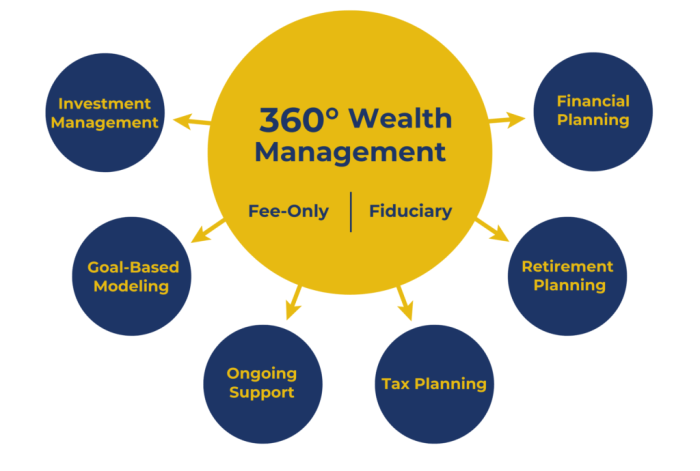
Securing your financial future doesn’t require vast sums of money. Affordable wealth management offers accessible strategies and tools for individuals of all income levels to build and protect their assets. This approach emphasizes practical financial planning, leveraging technology and efficient services to make wealth management achievable for a wider audience. It moves beyond the traditional, high-cost model, focusing on empowering individuals to take control of their financial well-being.
This guide explores the core principles of affordable wealth management, detailing the services available, effective financial strategies, and the role of technology in simplifying the process. We’ll also examine the challenges and opportunities within this growing sector, ensuring you understand how to navigate the path towards a secure financial future, regardless of your current financial standing.
Defining Affordable Wealth Management

Affordable wealth management represents a significant shift in the financial advisory landscape, aiming to make professional wealth management services accessible to a broader population. Unlike traditional wealth management, which often caters to high-net-worth individuals with substantial assets requiring complex strategies, affordable wealth management focuses on providing essential financial planning and investment services at a lower cost and with simplified processes.
This approach democratizes access to expert financial guidance, empowering individuals to build and secure their financial futures.The target audience for affordable wealth management services is considerably wider than that of traditional wealth management. It encompasses individuals and families with moderate incomes and assets who may not previously have considered professional financial advice due to perceived cost barriers. This includes young professionals starting their careers, families saving for education or retirement, and individuals seeking to manage their finances more effectively.
Essentially, anyone seeking professional guidance to improve their financial well-being, regardless of their current net worth, falls within this target audience.
Characteristics of Affordability in Wealth Management
Affordability in wealth management is defined by several key characteristics. Firstly, it involves lower fees compared to traditional services. This may involve transparent, flat fees, subscription-based models, or reduced percentage-based fees on assets under management. Secondly, affordable wealth management often simplifies investment strategies, focusing on cost-effective investment vehicles such as index funds or ETFs, minimizing the complexity and associated costs of actively managed portfolios.
Thirdly, it prioritizes digital tools and automation to streamline processes and reduce operational expenses, passing those savings onto the client. For example, an affordable wealth management firm might offer online portfolio management tools, automated investment rebalancing, and virtual consultations, thereby reducing overhead costs associated with physical office spaces and in-person meetings. Finally, affordable wealth management frequently emphasizes education and financial literacy, empowering clients to make informed decisions and manage their finances independently over time, reducing the need for ongoing, high-cost advisory services.
This holistic approach contributes to long-term financial success and reduces reliance on expensive, ongoing management.
Services Offered in Affordable Wealth Management
Affordable wealth management firms provide a streamlined approach to financial planning, focusing on essential services tailored to individuals and families with moderate assets. These services aim to make professional financial guidance accessible and affordable, bridging the gap often experienced by those who may not qualify for traditional, high-fee wealth management services. The emphasis is on practical, cost-effective solutions that deliver significant value.
The core services offered typically fall into several key areas, each designed to help clients build and protect their financial well-being.
Core Services in Affordable Wealth Management
Five core services commonly included in affordable wealth management packages are financial planning, investment management, retirement planning, tax planning, and estate planning. While the depth and breadth of each service might be adjusted based on the client’s needs and the specific firm’s offerings, these form the foundational elements of most affordable packages.
- Financial Planning: This involves creating a personalized financial roadmap, encompassing budgeting, debt management, and savings strategies. It often includes goal setting (e.g., buying a home, funding education) and developing a plan to achieve those goals.
- Investment Management: This service typically focuses on building and managing a diversified investment portfolio appropriate for the client’s risk tolerance and financial goals. Affordable options may utilize robo-advisors or a simplified, yet effective, investment approach.
- Retirement Planning: This includes analyzing retirement income needs, assessing current savings, and recommending strategies to maximize retirement savings through vehicles such as 401(k)s and IRAs.
- Tax Planning: This service helps clients minimize their tax burden through strategic planning and tax-efficient investing. It may involve tax-loss harvesting or exploring tax-advantaged investment accounts.
- Estate Planning: This typically involves basic estate planning documents such as wills and power of attorney, ensuring assets are distributed according to the client’s wishes and minimizing estate taxes where possible. More complex estate planning might be referred to specialized professionals.
Comparison of Affordable and Traditional Wealth Management Services
The table below highlights key differences between affordable and traditional wealth management firms in terms of services, cost, accessibility, and target audience.
| Service | Affordable Wealth Management | Traditional Wealth Management |
|---|---|---|
| Financial Planning | Basic financial planning, budgeting, goal setting | Comprehensive financial planning, including detailed cash flow analysis, tax optimization strategies, and complex estate planning |
| Investment Management | Robo-advisors, passively managed funds, simplified portfolio construction | Actively managed portfolios, complex investment strategies, alternative investments |
| Cost | Lower fees, often based on assets under management (AUM) with lower minimums or tiered fee structures | Higher fees, often based on AUM with high minimums, potentially including performance-based fees |
| Accessibility | Online platforms, broader reach, lower minimum investment requirements | In-person meetings, limited accessibility, high minimum investment requirements |
| Target Audience | Individuals and families with moderate assets, younger investors, those new to investing | High-net-worth individuals, sophisticated investors, families with significant assets |
Innovative, Cost-Effective Solutions in Affordable Wealth Management
Several innovative approaches have emerged to make wealth management more accessible and affordable. These strategies often leverage technology and streamlined processes to reduce costs without compromising quality.
- Robo-advisors: Algorithmic-based platforms that provide automated investment management, portfolio rebalancing, and tax-loss harvesting at a fraction of the cost of traditional advisors.
- Hybrid Models: Combining technology with human advisors, offering a blend of automated services and personalized guidance, creating a more cost-effective solution than purely human-led wealth management.
- Subscription-Based Services: Offering comprehensive financial planning and guidance through monthly or annual subscriptions, providing predictable and transparent pricing.
- Freemium Models: Providing basic financial tools and resources for free, while offering premium services (like personalized advice) for a fee.
Wealth Management
Wealth management is a holistic approach to financial planning, going beyond simple investment advice to encompass a broad range of services designed to help individuals and families grow, protect, and preserve their assets. It considers not only financial goals but also personal values, risk tolerance, and long-term objectives to create a personalized financial strategy. This strategy is then implemented and monitored over time, adapting to changing circumstances and market conditions.Wealth management encompasses various aspects of financial planning, including investment management, tax planning, estate planning, retirement planning, and risk management.
The ultimate goal is to help clients achieve their financial goals while minimizing risk and maximizing returns. A crucial aspect is the ongoing relationship between the client and the wealth manager, ensuring continuous support and adjustments to the financial plan as life circumstances evolve.
Types of Wealth Management Clients and Their Needs
Wealth management clients are diverse, each with unique financial situations, goals, and risk tolerances. Categorizing clients helps tailor services effectively. High-net-worth individuals (HNWIs), for example, often require sophisticated tax strategies, complex estate planning, and investment portfolios encompassing alternative assets like private equity or real estate. Ultra-high-net-worth individuals (UHNWIs) require even more specialized services, potentially including family office structures and philanthropic planning.
On the other hand, affluent individuals may focus on retirement planning, debt management, and long-term investment growth. Finally, younger clients may prioritize building wealth, managing student loans, and planning for future homeownership. Understanding these varying needs is fundamental to providing appropriate and effective wealth management services.
Roles of Professionals in Wealth Management
Several professionals contribute to comprehensive wealth management. Financial advisors, often the central point of contact, develop and implement financial plans, offering advice on investments, retirement, and other financial matters. They work closely with other specialists, such as estate planning attorneys who handle wills, trusts, and probate matters; tax advisors who optimize tax strategies; and insurance professionals who manage risk and provide protection.
Investment managers actively manage investment portfolios, selecting and monitoring assets to meet client objectives. Each professional plays a crucial role, contributing their expertise to create a cohesive and effective wealth management strategy. The collaboration between these professionals ensures clients receive comprehensive and coordinated advice, leading to improved financial outcomes.
Ultimately, affordable wealth management democratizes access to financial planning, empowering individuals to proactively manage their finances and build a brighter financial future. By embracing smart strategies, utilizing accessible technology, and seeking guidance when needed, anyone can embark on a journey towards achieving their financial goals. This approach emphasizes long-term financial health, promoting responsible spending, and strategic investment to build sustainable wealth over time.
Essential Questionnaire
What is the minimum amount I need to start with affordable wealth management?
There’s no set minimum. Many firms offer services tailored to various budgets, some even providing free introductory consultations or basic financial planning tools.
How do I choose an affordable wealth management firm?
Research firms carefully, comparing fees, services offered, and client testimonials. Look for transparency in their pricing and a good fit with your financial goals and risk tolerance.
Are there any risks associated with affordable wealth management?
Yes, as with any investment, there are inherent risks. It’s crucial to understand your risk tolerance and choose strategies aligned with your financial goals. Diversification is key to mitigating risk.
What if my financial situation changes significantly?
Reputable firms will work with you to adjust your plan as your circumstances evolve. Regular reviews and open communication are essential.


