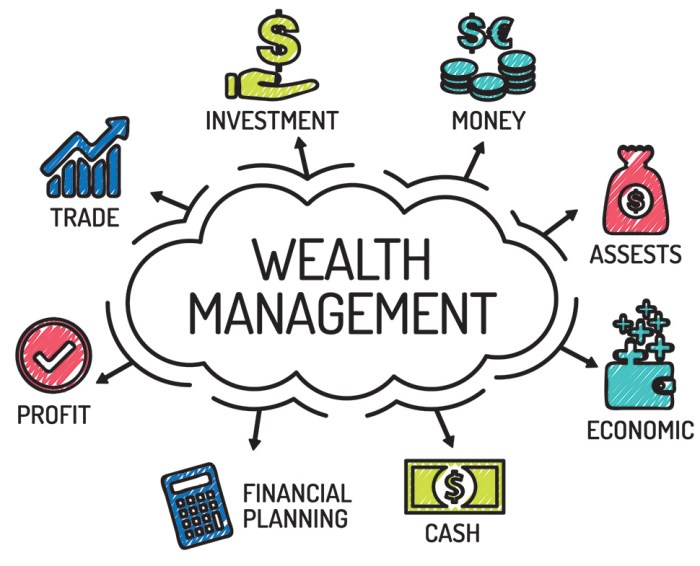
Navigating the complexities of personal finance can feel overwhelming, but effective wealth management provides a roadmap to financial security and prosperity. This guide explores the multifaceted world of wealth management services, encompassing financial planning, investment strategies, estate planning, and the crucial role of technology. We’ll delve into the intricacies of building a robust financial plan, tailored to individual needs and risk tolerances, and explore how a holistic approach can lead to long-term success.
From understanding different investment vehicles and asset allocation strategies to mitigating tax liabilities and ensuring a smooth wealth transfer to future generations, we’ll cover key aspects essential for achieving your financial goals. We’ll also examine the ethical considerations that underpin this vital service, highlighting the importance of transparency and trust in the client-advisor relationship.
Investment Strategies in Wealth Management
Effective wealth management hinges on carefully crafted investment strategies tailored to individual circumstances. This involves a deep understanding of risk tolerance, financial goals, and the diverse landscape of investment options available. A well-structured approach ensures the preservation and growth of capital over the long term, while mitigating potential losses.
Hypothetical High-Net-Worth Portfolio
This example Artikels a hypothetical portfolio for a high-net-worth individual with a moderate risk tolerance, aiming for long-term capital appreciation and income generation. The allocation is illustrative and should not be considered financial advice. Individual circumstances and risk profiles will necessitate customized portfolio construction.
| Asset Class | Allocation | Rationale |
|---|---|---|
| Equities (Domestic & International) | 40% | Provides long-term growth potential through exposure to a diversified range of companies across different markets. |
| Fixed Income (Bonds, Government Securities) | 30% | Offers stability and income generation, mitigating some of the volatility associated with equities. |
| Alternative Investments (Real Estate, Private Equity) | 20% | Introduces diversification and potentially higher returns, albeit with higher risk. |
| Cash and Cash Equivalents | 10% | Provides liquidity and serves as a buffer during market downturns. |
Diversification in Wealth Management
Diversification is a cornerstone of effective wealth management. It involves spreading investments across various asset classes to reduce the impact of any single investment’s underperformance. By diversifying, investors can potentially limit overall portfolio volatility and enhance the likelihood of achieving their financial goals.
Different asset classes possess unique risk and return characteristics. Equities, for instance, offer higher growth potential but are subject to greater price fluctuations. Fixed-income investments, on the other hand, provide more stability but generally offer lower returns. Alternative investments can offer diversification benefits and potentially higher returns, but often involve higher risk and less liquidity.
The optimal level of diversification depends on individual risk tolerance and investment objectives. A risk-averse investor might prefer a more conservative portfolio with a higher allocation to fixed income, while a risk-tolerant investor might allocate a larger portion to equities and alternative investments.
Examples of Successful Investment Strategies
Value investing, a strategy championed by Warren Buffett, focuses on identifying undervalued companies with strong fundamentals. This approach emphasizes long-term holding periods and a focus on intrinsic value rather than short-term market fluctuations. Buffett’s Berkshire Hathaway has demonstrated the remarkable long-term success of this strategy.
Another successful strategy is index fund investing, which involves passively tracking a broad market index like the S&P 500. This approach offers diversification and generally low expense ratios, making it a cost-effective way to participate in market gains. Index funds have consistently outperformed actively managed funds over the long term for many investors.
“The key to investing is not to pick the best stocks, but to pick the best strategies.”
Peter Lynch
Financial Planning within Wealth Management
Financial planning is the cornerstone of effective wealth management. It’s a proactive process designed to help individuals and families achieve their financial goals, whether that’s buying a home, funding a child’s education, or securing a comfortable retirement. A well-structured financial plan considers your current financial situation, your aspirations, and potential risks to create a roadmap for your financial future.
Developing a Comprehensive Financial Plan
Creating a comprehensive financial plan involves a structured approach. This step-by-step guide Artikels the key elements:
- Determine Your Financial Goals: Clearly define your short-term (e.g., paying off debt) and long-term (e.g., retirement) objectives. Quantify these goals with specific amounts and timelines.
- Assess Your Current Financial Situation: Compile a detailed inventory of your assets (e.g., savings, investments, property) and liabilities (e.g., loans, credit card debt). Calculate your net worth (assets minus liabilities).
- Create a Budget: Track your income and expenses to understand your spending habits. Identify areas where you can reduce expenses and allocate funds towards your goals. Use budgeting tools or apps to streamline this process.
- Develop a Debt Management Strategy: Prioritize paying down high-interest debt, such as credit card debt, while strategically managing other debts like student loans or mortgages. Explore options like debt consolidation or balance transfers.
- Plan for Retirement: Determine your desired retirement lifestyle and estimate the funds needed to support it. Contribute consistently to retirement accounts, such as 401(k)s and IRAs, and adjust your contributions as your income and goals change.
- Review and Adjust Your Plan Regularly: Life circumstances change, so it’s crucial to review and adjust your financial plan periodically (at least annually) to ensure it remains aligned with your goals and current situation. Consider seeking professional advice to adapt your plan as needed.
The Importance of Tax Planning in Wealth Management
Effective tax planning is essential for maximizing after-tax returns and minimizing tax liabilities. Strategies for achieving this include:
Tax planning isn’t simply about minimizing your tax bill at the end of the year; it’s about strategically managing your finances throughout the year to optimize your overall financial health. This includes making informed decisions about investments, retirement contributions, and charitable giving to reduce your tax burden while still achieving your financial goals. For instance, taking advantage of tax-advantaged accounts like 401(k)s and Roth IRAs can significantly reduce your taxable income in the present and/or future.
Tax-loss harvesting, where you sell losing investments to offset capital gains, is another valuable strategy. Additionally, careful estate planning can help minimize estate taxes and ensure a smooth transfer of wealth to heirs. Working with a qualified financial advisor and tax professional is crucial to developing a comprehensive tax plan that aligns with your individual circumstances and goals.
Retirement Planning Options
Choosing the right retirement plan is a critical decision. The following table compares some common options:
| Retirement Plan | Contribution Limits | Tax Advantages | Withdrawal Rules |
|---|---|---|---|
| 401(k) | Varies by employer; subject to annual IRS limits | Pre-tax contributions reduce current taxable income; investment earnings grow tax-deferred | Taxes owed upon withdrawal in retirement; early withdrawals may incur penalties |
| Traditional IRA | Annual IRS limits | Pre-tax contributions reduce current taxable income; investment earnings grow tax-deferred | Taxes owed upon withdrawal in retirement; early withdrawals may incur penalties |
| Roth IRA | Annual IRS limits | After-tax contributions; withdrawals in retirement are tax-free | No tax deduction for contributions; early withdrawals of earnings may be subject to penalties |
| Annuities | Varies by annuity type and provider | Tax-deferred growth; some annuities offer tax-advantaged features | Withdrawal rules vary; early withdrawals may incur penalties; tax implications depend on annuity type |
Estate Planning and Wealth Transfer
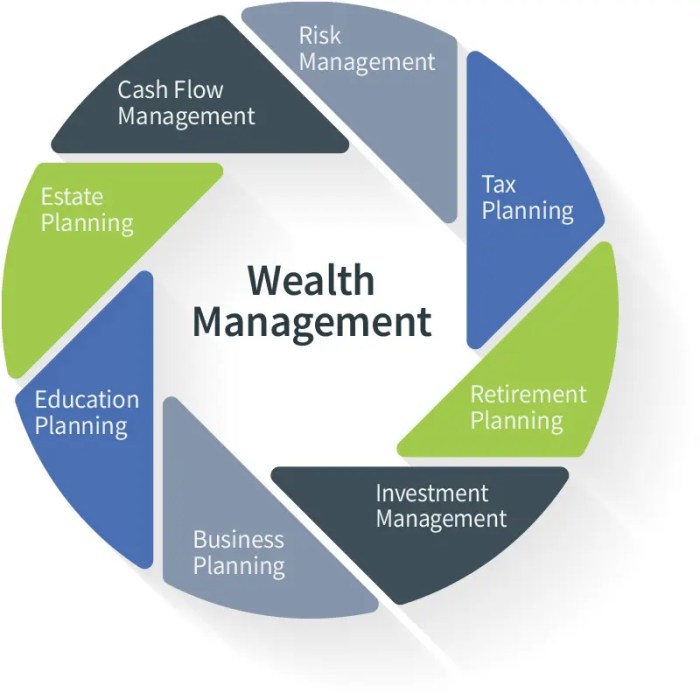
Effective estate planning is crucial for preserving your legacy and ensuring a smooth transfer of assets to your beneficiaries. It involves strategically managing your assets to minimize taxes, avoid family disputes, and fulfill your wishes regarding the distribution of your wealth after your passing. A well-structured estate plan provides peace of mind, knowing your affairs are in order and your loved ones are protected.
Estate Planning Tools
Several essential tools facilitate effective estate planning. Understanding their functions and suitability for your specific circumstances is vital. The choice of tools often depends on the complexity of your assets, family dynamics, and tax implications.
- Wills: A will is a legal document outlining how you wish to distribute your assets after your death. It names an executor to manage the process and designates beneficiaries for your property, including real estate, investments, and personal belongings. A will is essential for everyone, regardless of asset size, to ensure their wishes are followed.
- Trusts: Trusts are legal entities that hold and manage assets for the benefit of beneficiaries. They offer greater control over asset distribution and can provide tax advantages. Various types of trusts exist, such as revocable living trusts (allowing you to modify or revoke the trust during your lifetime) and irrevocable trusts (offering more significant tax benefits but limiting your control after establishment).
- Power of Attorney Documents: These documents authorize another person (your attorney-in-fact or agent) to manage your financial and/or healthcare affairs if you become incapacitated. A durable power of attorney remains effective even if you become incapacitated, while a springing power of attorney only takes effect upon the occurrence of a specified event, such as incapacitation.
Estate Tax Minimization Strategies
Minimizing estate taxes is a key objective of many estate plans. Strategies for achieving this often involve careful asset allocation and utilizing tax-advantaged vehicles.
- Gifting: Making gifts to beneficiaries during your lifetime can reduce the size of your taxable estate. Annual gift tax exclusions allow for a certain amount of gifting without incurring tax liabilities. Strategic gifting, combined with proper legal counsel, can significantly reduce your estate tax burden.
- Charitable Giving: Donating assets to qualified charities can generate tax deductions, thus reducing your taxable estate. This strategy not only minimizes taxes but also allows you to support causes you care about.
- Trusts for Tax Reduction: Certain types of trusts, such as irrevocable life insurance trusts (ILITs) and qualified personal residence trusts (QPRTs), can help shield assets from estate taxes. These trusts are complex and require professional advice to implement effectively.
Sample Estate Plan for a High-Net-Worth Family
Consider a family with significant assets in real estate, investments, and a family-owned business. Their estate plan might include:
- Revocable Living Trust: To manage assets during their lifetime and facilitate a smooth transfer after death, minimizing probate delays and costs. This allows for flexibility and control while providing clear instructions for asset distribution.
- Irrevocable Life Insurance Trust (ILIT): To own and manage life insurance policies, keeping the death benefit outside the taxable estate. This protects the death benefit from estate taxes, ensuring the full amount is available to the beneficiaries.
- Power of Attorney Documents: To designate trusted individuals to manage financial and healthcare decisions should either spouse become incapacitated. This ensures continuity of care and financial management in unforeseen circumstances.
- Specific Bequests in the Trust: Clearly outlining the distribution of specific assets to individual beneficiaries, taking into account family dynamics and individual needs. This avoids potential conflicts and ensures assets are distributed according to the family’s wishes.
This is a simplified example; a comprehensive estate plan would require personalized consideration of specific assets, tax implications, family dynamics, and potential legal challenges. Professional advice from estate planning attorneys and financial advisors is strongly recommended.
Technology’s Role in Wealth Management
The financial landscape has been dramatically reshaped by technology, impacting wealth management services profoundly. This transformation encompasses everything from client interaction and portfolio management to risk assessment and estate planning. The integration of technology offers both opportunities and challenges, necessitating a nuanced understanding of its impact on traditional practices and the emergence of new models.Technology has significantly altered how wealth management firms operate and interact with clients.
Robo-advisors, online platforms, and sophisticated data analytics tools are now integral components of many firms’ strategies, offering clients increased accessibility, personalized service, and potentially lower costs. However, the human element remains crucial, especially in complex situations requiring personalized advice and relationship management.
Robo-Advisors and Online Platforms
Robo-advisors utilize algorithms and automated processes to provide investment advice and portfolio management. These platforms typically offer low fees and 24/7 accessibility, making them attractive to younger investors or those with simpler financial needs. Online platforms, while often incorporating robo-advice features, also provide access to human advisors for more complex financial situations. The success of these platforms hinges on transparency, user-friendliness, and robust security measures.
For example, Betterment and Wealthfront are prominent examples of robo-advisors that have successfully attracted a significant client base by offering low-cost, automated investment solutions. These platforms typically use algorithms to create diversified portfolios based on risk tolerance and investment goals.
Traditional vs. Technology-Driven Wealth Management
Traditional wealth management relies heavily on in-person interactions with financial advisors who provide personalized, holistic financial planning. This approach often involves higher fees, reflecting the personalized service and expertise provided. Technology-driven solutions, conversely, offer greater accessibility, lower costs, and increased efficiency through automation. However, the lack of personalized human interaction and the potential for algorithmic biases are significant drawbacks.
A hybrid approach, combining the personalized touch of human advisors with the efficiency of technological tools, is increasingly becoming the preferred model for many wealth management firms. This allows them to cater to a broader range of clients with varying needs and technological comfort levels.
Emerging Technological Trends
Several emerging technologies are poised to further transform the wealth management industry. Artificial intelligence (AI) is rapidly advancing, enabling more sophisticated risk assessment, personalized investment strategies, and improved fraud detection. Blockchain technology offers the potential for enhanced security and transparency in transactions and asset management. The increasing use of big data analytics allows for more precise market predictions and personalized financial planning.
For instance, the use of AI-powered chatbots for initial client inquiries and basic financial advice is already becoming commonplace, freeing up human advisors to focus on more complex issues. The integration of blockchain technology could revolutionize the management of digital assets and streamline estate planning processes.
Ethical Considerations in Wealth Management
The ethical responsibilities of wealth managers are paramount, forming the bedrock of trust and long-term client relationships. Operating within a framework of strict ethical guidelines ensures the integrity of the wealth management profession and protects the interests of clients. This involves a deep understanding and consistent application of fiduciary duty and the maintenance of strict client confidentiality.Ethical dilemmas are inevitable in wealth management, requiring careful consideration and a commitment to acting in the best interests of the client, even when faced with challenging situations.
Transparency and open communication are crucial for navigating these challenges and fostering a strong, trusting relationship.
Fiduciary Duty and Client Confidentiality
Wealth managers operate under a fiduciary duty, a legal and ethical obligation to act solely in the best interests of their clients. This entails prioritizing client needs above personal gain, avoiding conflicts of interest, and providing full disclosure of all relevant information. Client confidentiality is equally crucial, protecting sensitive financial and personal information from unauthorized access or disclosure. Breaching this trust can have severe legal and reputational consequences.
For example, a wealth manager who secretly invests in a company before recommending it to a client, thereby benefiting personally before the client, is a clear violation of fiduciary duty. Similarly, disclosing a client’s financial situation to a third party without explicit consent is a breach of confidentiality.
Examples of Ethical Dilemmas and Potential Solutions
Ethical dilemmas can arise in various situations. Consider a scenario where a client requests an investment strategy that carries a high degree of risk, despite their apparent lack of risk tolerance. The wealth manager faces the dilemma of either following the client’s instructions, potentially leading to significant financial losses, or recommending a more suitable, albeit less lucrative, strategy. A potential solution involves engaging in a thorough discussion with the client, clearly explaining the risks involved, and documenting the conversation.
If the client persists with the high-risk strategy, the wealth manager should obtain informed consent in writing. Another example involves a situation where a wealth manager discovers that a client is engaged in illegal activities using their managed assets. The ethical obligation is to report such activities to the appropriate authorities, even though it may damage the client relationship.
Transparency and Communication in Building Trust
Transparency and open communication are essential for building and maintaining trust with clients. This involves clearly explaining investment strategies, fees, and potential risks in a way that is easily understandable. Regular updates on portfolio performance and proactive communication regarding any significant market events or changes in the client’s financial situation are crucial. For instance, a wealth manager should clearly Artikel all fees associated with their services, including any commissions or performance-based incentives.
Furthermore, open communication channels, such as regular meetings and readily available contact information, help foster a sense of trust and collaboration. A proactive approach to communication, addressing potential concerns before they escalate, further strengthens the client relationship.
Wealth Management
Holistic wealth management goes beyond simply managing investments; it’s about creating a comprehensive strategy that addresses all facets of your financial life and integrates them with your personal and family goals. It recognizes that wealth is more than just a number in a bank account; it’s about securing your future, achieving your aspirations, and leaving a lasting legacy. This integrated approach ensures that all aspects of your financial life work together harmoniously to maximize your overall well-being.
The Intertwined Aspects of Holistic Wealth Management
Holistic wealth management seamlessly integrates various disciplines to provide a comprehensive strategy. Investment strategies, for example, are not developed in isolation but are carefully aligned with your overall financial plan, considering your risk tolerance, time horizon, and specific financial objectives. Financial planning itself takes into account not only your current financial situation but also your future goals, such as retirement, education funding, or major purchases.
Estate planning, then, ensures that your accumulated wealth is transferred efficiently and effectively to your beneficiaries according to your wishes, minimizing tax implications and potential family disputes. This integrated approach ensures that your investments work towards your long-term goals, your financial plan accounts for potential inheritance, and your estate plan complements your lifetime financial strategy.
Key Characteristics of Holistic Wealth Management
The holistic approach distinguishes itself from traditional methods in several key ways. Understanding these differences is crucial for choosing the approach that best aligns with your individual needs and circumstances.
- Client-centric focus: Holistic wealth management prioritizes understanding the client’s unique circumstances, values, and aspirations, tailoring strategies to individual needs rather than applying a one-size-fits-all approach.
- Integrated approach: It considers all aspects of a client’s financial life – investments, financial planning, tax planning, estate planning, and insurance – in a coordinated and synergistic manner.
- Long-term perspective: Strategies are designed with a long-term horizon in mind, focusing on sustainable wealth creation and preservation rather than short-term gains.
- Proactive planning: It involves proactive planning for various life events and contingencies, including retirement, education, and unforeseen circumstances.
- Ongoing monitoring and adjustments: Regular reviews and adjustments are made to the strategy to ensure it remains aligned with the client’s evolving needs and market conditions. This dynamic approach ensures that the plan remains relevant and effective over time.
- Emphasis on family dynamics: Holistic wealth management often considers the needs and goals of the entire family, fostering open communication and collaboration to ensure the long-term well-being of all family members.
Ultimately, successful wealth management is a journey, not a destination. It requires careful planning, proactive decision-making, and a long-term perspective. By understanding the various components of wealth management – from investment strategies and financial planning to estate planning and the integration of technology – individuals can take control of their financial future and build a legacy of prosperity. This comprehensive approach ensures not only financial security but also peace of mind, knowing that your financial well-being is in capable hands.
FAQ Guide
What is the difference between a financial advisor and a wealth manager?
Financial advisors typically focus on specific aspects of financial planning, such as retirement or investment strategies. Wealth managers offer a more holistic approach, encompassing financial planning, investment management, and estate planning.
How much does wealth management cost?
Fees vary widely depending on the services provided and the assets under management. Common fee structures include percentage-based fees, hourly rates, and flat fees.
How often should I meet with my wealth manager?
The frequency of meetings depends on individual needs and circumstances, but quarterly or semi-annual reviews are common.
What is a fiduciary?
A fiduciary is a person or institution that acts in the best interests of another person, placing their client’s needs above their own.


